Ambient reverbs are a varied and complex category. I make Gaussian Blur, so I’m biased. Here’s my attempt at taking a look at where it fits and options to consider.
The short version: most big reverbs let you set how long the tail lasts. Gaussian Blur also lets you set when the reverb swells in, and it builds that swell from grains of your audio. If you want a lush hall or an endless delay wash, other plugins on this list will suit you better.
What is a bloom reverb?
A normal reverb is loudest right after the sound and then decays. A bloom reverb starts quiet and builds, so the wet sound arrives after the dry note, like a swell from a volume pedal. The term is familiar from hardware like the Strymon BigSky’s Bloom machine.
Gaussian Blur builds the bloom out of grains: short overlapping slices of the recent input. A bloom curve sets when those grains are most present, from 20 milliseconds to 5 seconds after the sound, or locked to the host tempo. The grains feed a plate-style tail, and part of that tail feeds back into the grains.
The quick comparison
| Gaussian Blur | Supermassive | ValhallaShimmer | Blackhole | Portal | |
|---|---|---|---|---|---|
| Approach | Granular bloom into plate tail | Feedback delay network reverb/delay | Pitch-shifted reverb | Large algorithmic reverb | Granular effect |
| Control over swell timing | Bloom curve, 20 ms to 5 s, tempo sync | Indirect | Indirect | Gravity control | Grain envelope |
| Reverse grains | Probability per grain | No | No | Reverse-style envelope via Gravity | Yes |
| Shimmer | Probability per grain, octaves or fifths and octaves | No | Core feature | No | Pitch per grain |
| Linux | Yes | No | No | No | No |
| iOS | Yes, AUv3 | No | No | Yes | No |
| Price | Paid, 14-day trial | Free | Paid | Paid | Paid |
Gaussian Blur
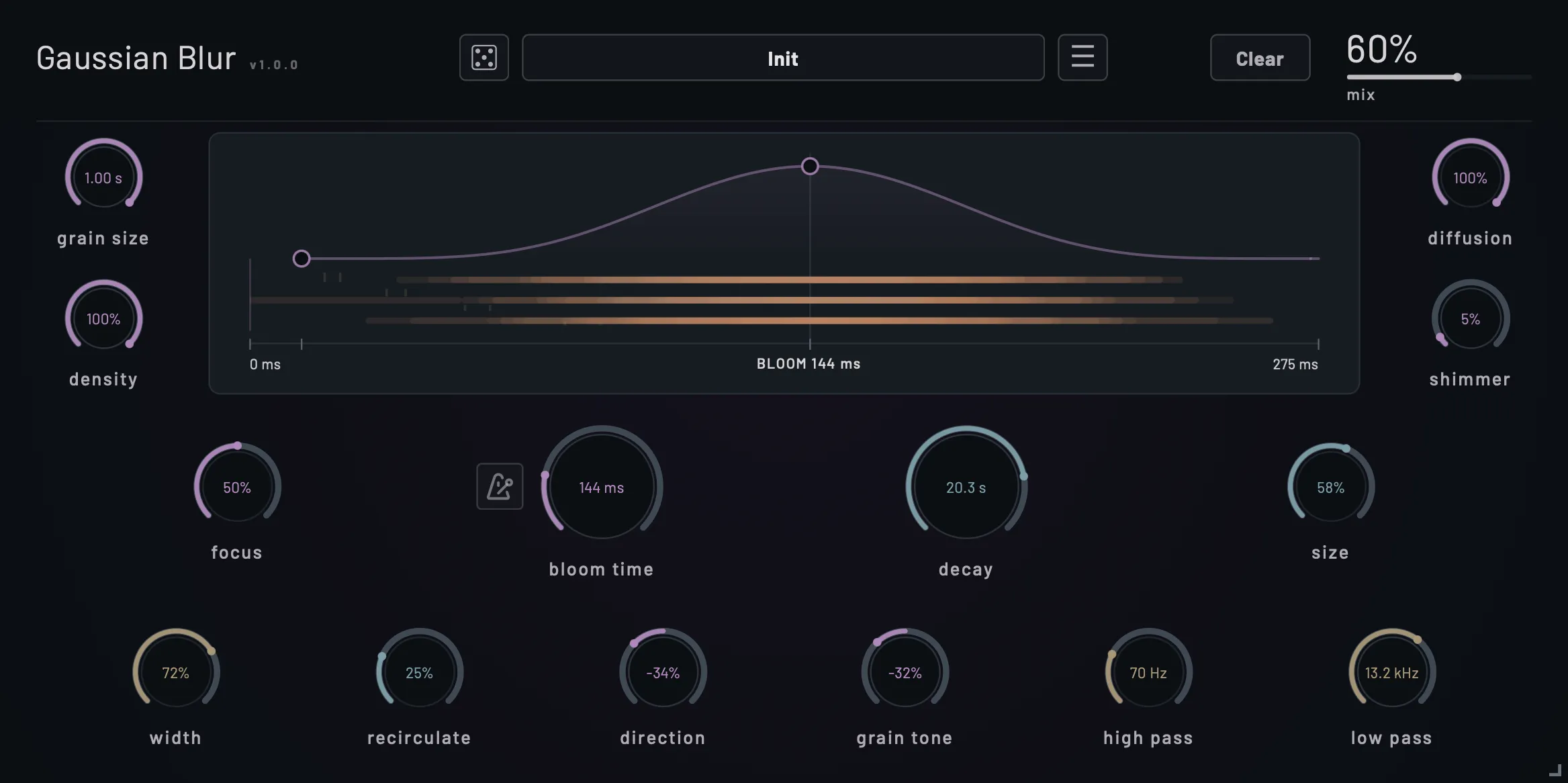
Where it’s strong:
- You decide when the reverb arrives. Bloom Time sets the center of the swell, Spread sets how much recent audio blends into it, and Shape and Bias set whether the grains cluster tightly or spread evenly, and whether they lean early or late. You drag these on the bloom display instead of hunting through numbers.
- Reverse and shimmer are blends, not switches. Direction sets the chance that each new grain plays backward, so you can mix in 30% reverse grains instead of going all-reverse. Shimmer works the same way: a small percentage of grains shifted up an octave adds sparkle without the familiar choir-pad sound.
- Sources stay put in the stereo field. Each grain plays its left and right channels a few cents apart instead of panning grains randomly, so mono sources widen gently, low end stays centered, and a hard-panned guitar stays on its side.
- Recirculate turns it into a texture generator. Feeding grains back into grains creates generations of the original phrase that can repeat, reverse, or climb in pitch with Shimmer.
- Long tails with mix controls. Decay goes up to 40 seconds. High Pass, Low Pass, Grain Tone, and Width keep a huge tail from swamping the mix.
- It runs on macOS, Windows, Linux, and iOS.
Where it isn’t:
- No conventional rooms or halls. It always has some grain texture. For a natural drum room or a vocal plate in a pop mix, use a dedicated room or plate reverb.
- No freeze or ducking. You can get very long sustains with Decay and Recirculate, but there’s no infinite-hold button and no sidechain ducking. Duck it with your DAW’s compressor on the return.
- No LFOs or step sequencing. It’s a reverb, not a rhythmic glitch tool. Automate it from your host.
Valhalla Supermassive
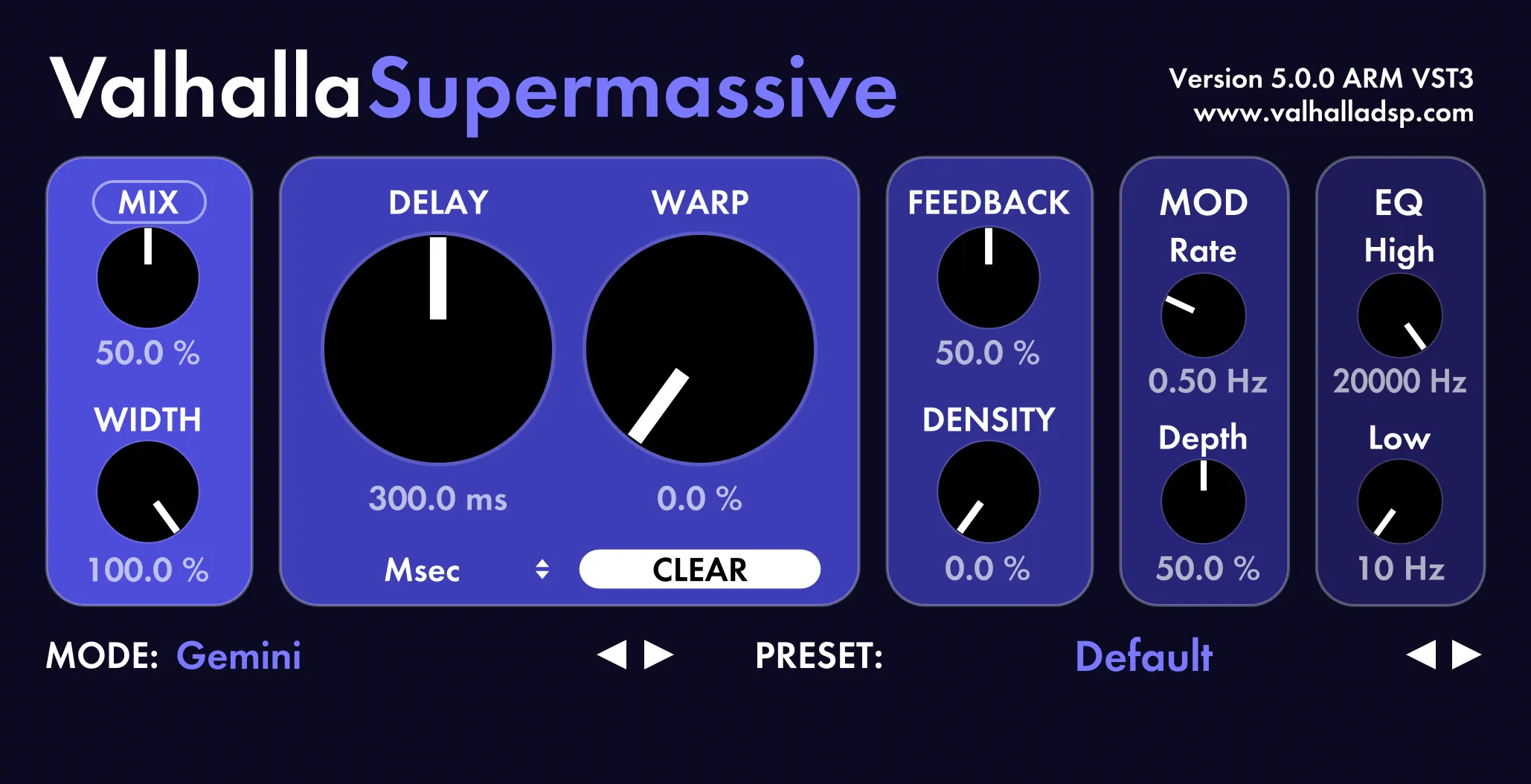
What it is: a free reverb and delay from Valhalla DSP, built for huge washes and long feedback delays, with a collection of named modes.
How it compares: if you’ve never used an ambient reverb, install Supermassive first. It’s free and it sounds great. It’s built around delay feedback and diffusion, so swells come from feedback and the shape of each mode rather than a curve you draw. Gaussian Blur gives you more direct control over the timing of the swell and adds grain behavior (reverse, shimmer, recirculation) that Supermassive doesn’t do.
Use Supermassive for big washes and echo clouds. Use Gaussian Blur for swells timed to the music and more complex textures.
ValhallaShimmer
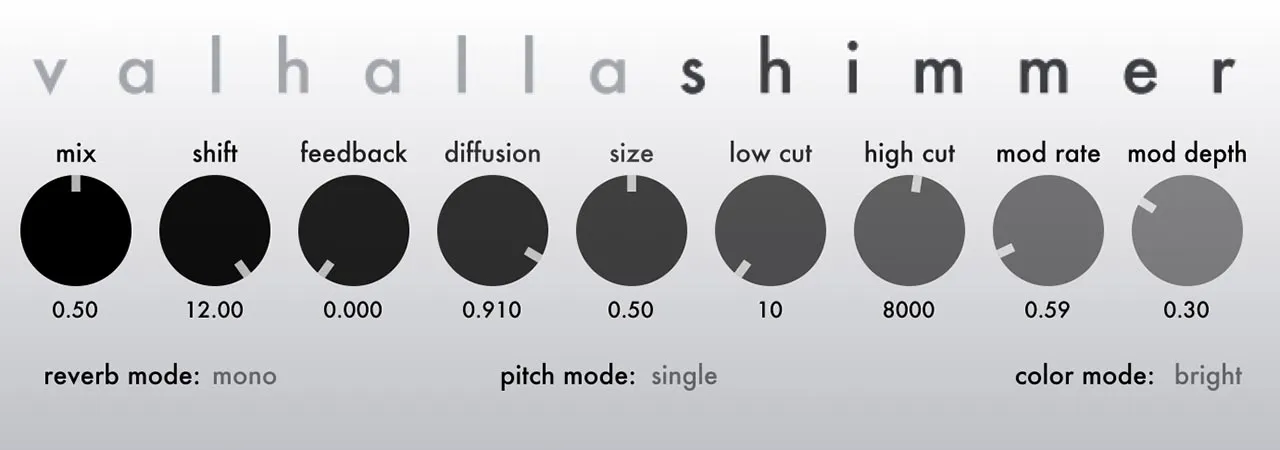
What it is: Valhalla’s pitch-shifting reverb, a classic shimmer sound.
How it compares: ValhallaShimmer shifts the whole reverb feedback path, which gives you the dense, rising shimmer heard on a lot of ambient guitar records. In Gaussian Blur, shimmer is a probability across individual grains, so it’s easy to keep it subtle, and you can bring in the fifth as well as the octave. If you want a more traditional shimmer, try ValhallaShimmer.
Eventide Blackhole
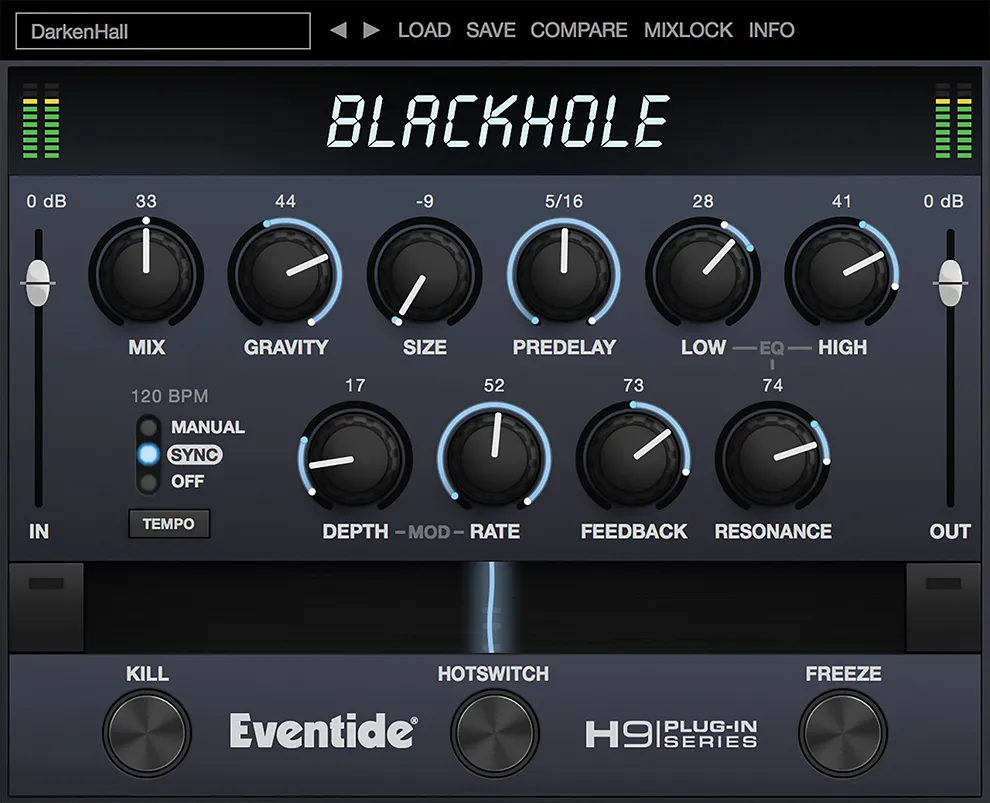
What it is: Eventide’s very large reverb, originally from their hardware processors. Its Gravity control can flip the decay so the reverb builds instead of fading.
How it compares: Blackhole is the closest to Gaussian Blur in purpose: enormous, otherworldly spaces that can swell in. Blackhole is a smoother algorithmic reverb. Gaussian Blur is grainier and gives you more control over the timing and makeup of the swell. If you want a cinematic space without grain texture, pick Blackhole.
Output Portal
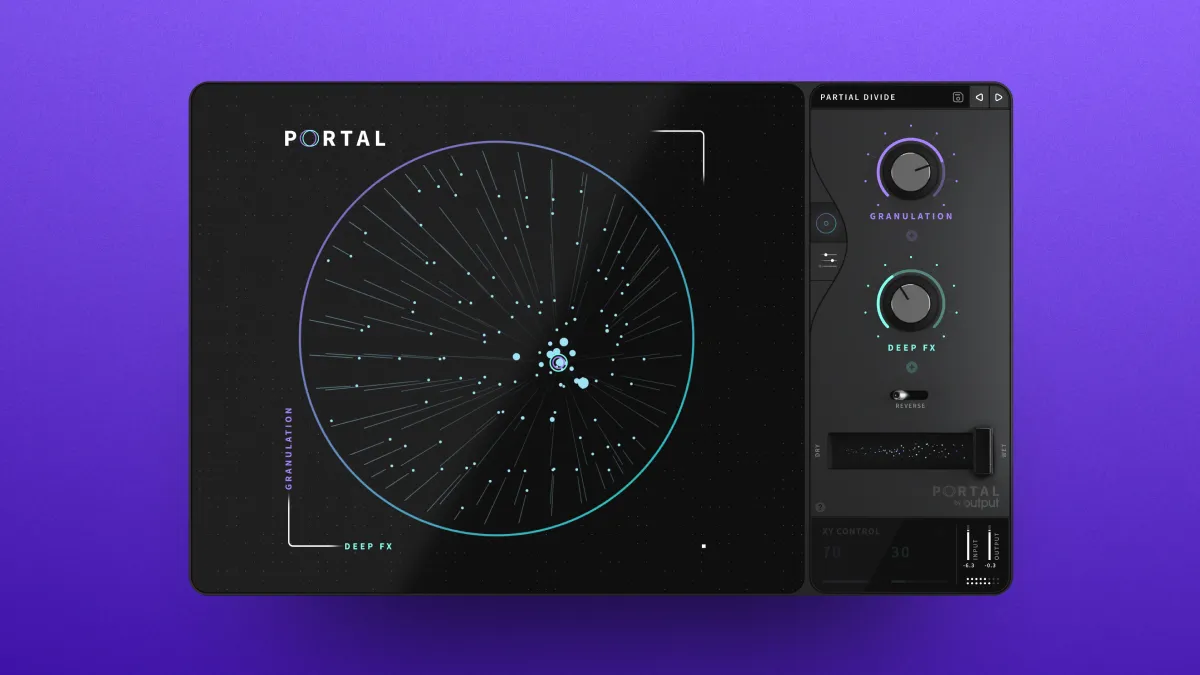
What it is: a granular effect from Output, known for rhythmic, preset-driven transformations.
How it compares: Portal is a granular multi-effect with modulation and a deep preset browser. It’s great at turning a loop into something new. Gaussian Blur is a reverb first: the grains are there to build a swell and a tail, not to rebuild the rhythm. If you’re after stutters and rhythmic mangling, use Portal.
Others worth knowing
- Red Panda Particle 2 : a granular delay and pitch shifter with a cult following from the pedal world. Great for glitchy, pitch-warped repeats.
- Strymon BigSky (hardware): if you play guitar into pedals, its Bloom and Cloud machines are the reference point for this whole style.
So which one should you get?
- You want to control when the reverb swells, blend in reverse and shimmer grains, and run it on Linux or iPad: Gaussian Blur.
- You want a free ambient reverb: Valhalla Supermassive.
- You want the classic octave-up shimmer wash: ValhallaShimmer.
- You want a smooth, enormous cinematic space: Eventide Blackhole.
- You want rhythmic granular mangling: Output Portal.
Many people end up with more than one of these, because they do different jobs. Gaussian Blur has a 14-day free trial on macOS, Windows, and Linux.